A
A

Social Affairs

O passado pela frente
Viaje pelos principais acontecimentos deste tema
JoakimPalme.jpg
Author
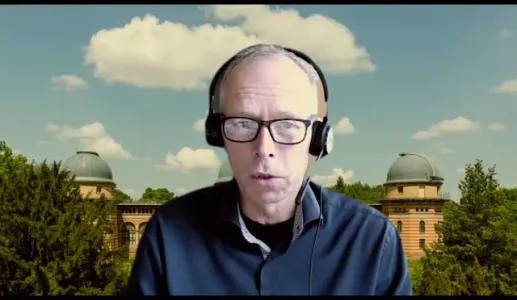
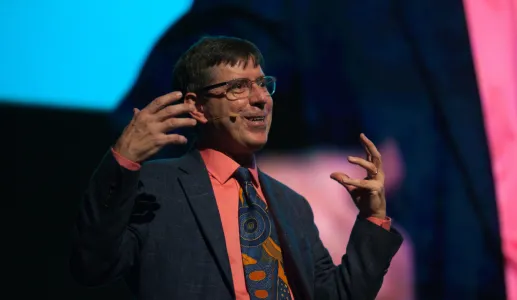
Joakim Palme
The eldest son of Olof Palme, former prime minister of Sweden, he is a sociologist and Professor of Political Science at Uppsala University, where he also directs the Centre for Labour Studies. He specialises in social policies from a comparative perspective, with an emphasis on the Swedish pension model, and is also an expert with a solid empirical basis on the social and economic efficiency of public pension systems. He has carried out several studies on the welfare state as an equality strategy, European welfare policies, income redistribution and mixed (public-private) social protection systems, ageing societies, social investment and migration. Responsible for research projects focusing on the effects of the global financial crisis, with a special focus on the political and social relations between European countries, he has participated in various Swedish government commissions and was CEO of the Institute for Futures Studies in Copenhagen. He is a member of the Royal Swedish Academy of Letters, History and Antiquities, Chairman of the International Sociological Association’s Research Committee "Poverty, Social Welfare and Social Policy", Chairman of the Migration Studies Delegation (Delmi) and a member of UNRISD (UN Research Institute for Social Development). In 2017, he was appointed by the Secretary-General of the UN to head the Swedish Institute for Social Research, a position he currently holds.

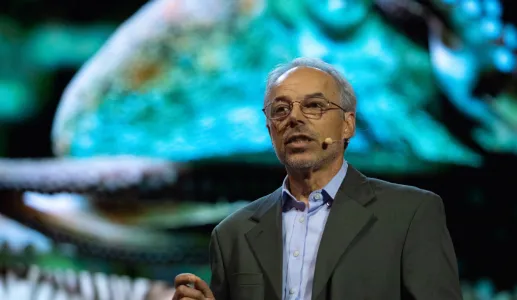
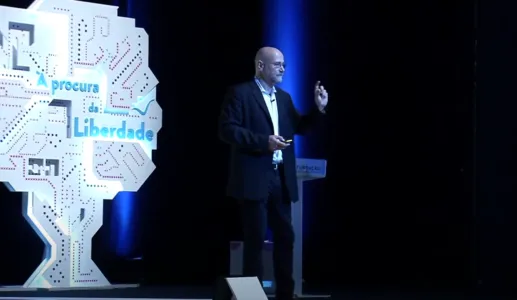
JimmyWales.png
Author
Jimmy Wales
As well as being a technology visionary and a pioneer of «wikis» (a set of web pages designed to allow anyone to contribute and change content), he is best known as the Founder of Wikipedia, an international, free-content Internet encyclopaedia, and of the Wikimedia Foundation. He is also the founder of WikiTribune, a revolutionary ad-free news platform that produces fact-based journalism, and co-founder of Wikia, a free private web hosting service that he created in 2004. His work with Wikipedia, which has become the world's largest encyclopaedia, led to him being named by Time magazine as one of the «100 Most Influential People» in 2006, in the «Scientists and Thinkers» category.
JeanPisani-Ferry.png
Author
Jean Pisani-Ferry
Professor of Economics at Sciences Po University in Paris and the Hertie School of Governance in Berlin, he holds the Tommaso Padoa Schioppa Chair at the European University Institute in Florence and is an Honorary Mercator Member at Bruegel, the Brussels-based economic think tank. His publications include numerous books and articles on economic policy and European politics. He was Director of Programme and Ideas for Emmanuel Macron's presidential campaign (2017) and Commissioner General for the Strategy of France (2013-16), the government's think tank, while in 2005 he founded the Bruegel Institute, which he directed until 2013.
GregoryClark.png
Author
Gregory Clark
He is one of the world's most prominent economic historians. His journey has taken him to Scotland to the California sunshine, stopping off at King's College, Cambridge and Harvard, as well as Stanford and Michigan. He is Professor of Economics at UC-Davis, Chairman of the Steering Committee of the All-UC Economic History Group and Associate of the Centre for Poverty Research at UC-Davis.
GhidaFakhry.png
Author
Ghida Fakhry
A journalist with over 20 years' experience, she presents a political affairs programme on the American television channel TRT World and is a regular contributor to the Huffington Post. She began her career as a political correspondent for a leading Middle Eastern newspaper based in the UK. She later joined the Aljazeera television channel in NY as Editor-in-Chief, where she covered the September 11 attacks. She was a journalist on the war scenes in Iraq and Afghanistan following the US invasion in 2003. She conducted in-depth interviews with senior US officials, including Defense Secretary Donald Rumsfeld and Secretary of State Colin Powell. HER work included following the UN extensively, covering the Security Council and the General Assembly. For the UN, she travelled with Kofi Annan throughout the Middle East and Africa, with whom she carried out several in-depth interviews during his 10-year tenure. Her experience as a political journalist includes interviews with various heads of state and government, including Libyan leader Muammar Gaddafi, Israeli President Shimon Peres, Afghan President Hamid Karzai and Iranian President Mahmoud Ahmadinejad.
FreidaPinto.jpg
Author
Freida Pinto
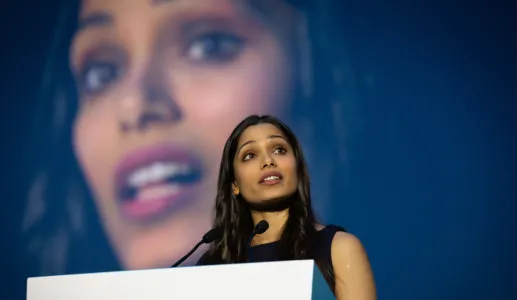
She is best known for her roles in «Slumdog Millionaire» (2008), for which she was nominated for a BAFTA award for Best Supporting Actress, and Planet of the Apes (2011). Before her acting career, she studied English literature, psychology and economics at St. Xavier's College in Bombay and worked as a model. In addition to her film work, especially in Hollywood productions, she promotes humanitarian causes around the world and is especially dedicated to women's rights and living conditions. She is a global ambassador for Plan International's «Because I AM a Girl» programme, which promotes gender equality to lift millions of girls out of poverty, and also collaborates with the NGO We Do It Together, which funds films and documentaries focused on women's empowerment.
FranciscaGorjaoHenriques.png
Author
Francisca Gorjão Henriques
She has a Bachelor’s degree in Communication and believes that the Público was her school of journalism. She spent 14 years in the international politics section exploring, Asia in particular. What does a school for migrant children in Beijing have in common with a middle-class family in Tokyo? A writer in Goa looking for their identity in the largest slum in Mumbai? The lowering the Portuguese flag in Macao and a trip through Thai cuisine? Nothing and a lot. For Francisca Gorjão Henriques, all the reports were lessons on how each place is multiple. She believes that these years helped her in the steps that followed. She left the Público newspaper after 20 years to devote herself to the Loaf by Loaf Association, which promotes the integration of refugees from the Middle East. But she did not leave journalism, continuing to work as a freelancer, reporting and doing fixer work.
EmmaDuncan.jpg
Author
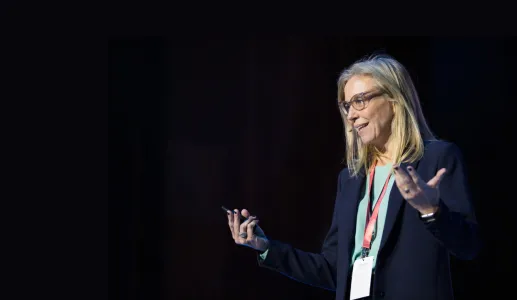
Emma Duncan
She is the Social Policy Editor of the weekly magazine «The Economist», where she has published articles and opinion columns on education, human capital and the social impacts of government policies and private investment. She has a degree in politics, philosophy and economics from Oxford University and began her career as a researcher, scriptwriter and reporter at «Independent Television News» (ITN). Before becoming Senior Editor at «The Economist», she was Correspondent and Editor for the Asia section; Chief Reporter and Editor for Climate Change; made special reports on issues such as the Middle East, domestic politics, university education, the media business, the food and transport industry; was Correspondent in Delhi and covered countries such as India, Pakistan, Bangladesh and Sri Lanka; and was Editor of the fortnightly magazine 1843. An advisor to the George Orwell Trust and Visiting Fellow at Nuffield College (Oxford), she has collaborated with publications such as «The Evening Standard», «The Sunday Times», «The Daily Telegraph», «Vogue» and «Cosmopolitan» and also writes a regular column in «The Times». She is the author of «Breaking the Curfew», a book about Pakistan's politics and society.
ElsaFornero.jpg
Author
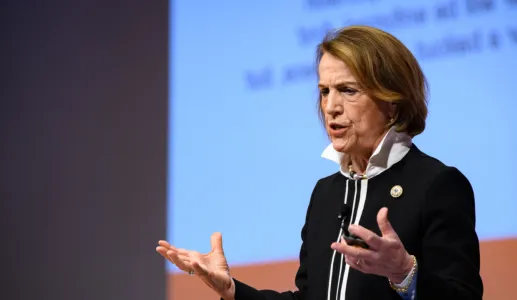
Elsa Fornero
Specialist in macroeconomics and social security and pensions and expert in the sustainability of social welfare systems and the regulation and supervision of pension systems. She is Professor of Political Economy at the University of Turin (Faculty of Economics) and Scientific Coordinator of the Centre for Research on Pensions and Welfare Policies, the first research centre in Italy (and one of the first in Europe) specifically focused on the economic analysis of pensions, aging and public policies typified by the concept of the welfare state. She was Minister of Labor, Social Policies and Gender Equality in Mario Monti's government, where she conceived and designed a series of labour market and pension reforms that were crucial to Italy’s exit from the excessive deficit procedure applied by the European Union. She sought to launch a series of measures that would guarantee a truly intergenerational redistribution of income in the long term.


Carlos Costa.png
Author
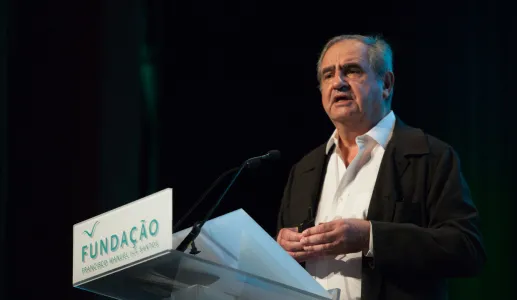
Carlos Costa
Former governor of the Bank of Portugal. He was managing director of Milleninum BCP (2000-2004), director of Caixa Geral de Depósitos (2004-2006) and vice-president of the EIB (2006-2010).