What do we mean when we talk about «human capital»? What is the relationship between democracy, human rights and economic prosperity? Are the poor doomed to remain poor? Nobel economist James Heckman, answers these questions in another episode of «It's Not That Simple».
Winner of the Nobel Prize for Economics in 2000, Heckman is a professor of Economics at the University of Chicago. His research focuses on issues such as inequality, social mobility and economic opportunity; labor economics; the dynamics of lifelong learning; microeconometrics; and causal models from economic theory.
Heckman is also director of the Centre for the Economics of Human Development and co-director of the Global Working Group on Human Capital and Economic Opportunity. In 1983, he was awarded the John Bates Clark Medal. Heckman has also been a member of the John Simon Guggenheim Memorial Foundation since 1978 member of the American Academy of Arts and Sciences, The Econometric Society since 1980, and the National Academy of Sciences.
In this episode, the American economist sets out the «set of capabilities that make up human capital and allow us to function well in the world». He examines how the 1964 human and civil rights campaign in the United States boosted the country's economy.
He also analyses China's economic success, arguing that it is less the result of the regime's political authoritarianism, but rather of widening women's access to education and their subsequent broader and more qualified participation in the workforce. He goes on to contrast China with India, which may be limiting its potential development by putting some minorities at a disadvantage.
Furthermore, he discusses the impact of inequality on skills acquisition and how poor people can become trapped in a vicious cycle of poverty. Nevertheless, he challenges the idea that inequality is increasing in the US. Finally, Heckman discusses the unintended negative results of well-intentioned policies, such as the minimum wage or rent control, in an unmissable conversation.
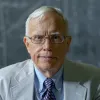

Giving Kids a Fair Chance, James Heckman, 2013
James Heckman’s study «Inequality in America: What role for human capital policies?»
James Heckman’s Nobel Prize Lecture
An interview with James Heckman on the «Emerging Economic Arguments for Investing in the Health of Our Children’s Learning»
An interview with James Heckman on his «controversial approach to solving inequality»
Podcast It’s Not That Simple «Moving up in life», with John Friedman
An interview with Mariana Mazzucato about «the future of capitalism»
An interview with Robert Reich on «how to solve the problem of inequality»
63


Big issues, big names in a new programme dedicated to interviews with international personalities from the world of politics, economics and society. These conversations with special guests, conducted by journalist Pedro Pinto, aim to simplify and help demystify some of today's most important issues. Every month, on the Foundation's website.