
Ten years after the Brexit referendum: What public opinion reveals about EU-UK relations





Ten years ago, on 23 June 2016, 51.89% of British voters chose to leave the European Union. The Brexit referendum sent shockwaves across the continent. In its aftermath, debate in continental Europe centred on whether other member states might follow the UK’s example and leave the Union. In Britain, the debate shifted to the terms of departure, the country’s future relationship with the EU, and Britain’s place in the world after Brexit.
Against the backdrop of renewed debates about the UK’s relationship with Europe, the Bertelsmann Stiftung presents public opinion data collected over the past ten years. The findings reveal five key insights into the past, present and future of EU–UK relations in a changing world.
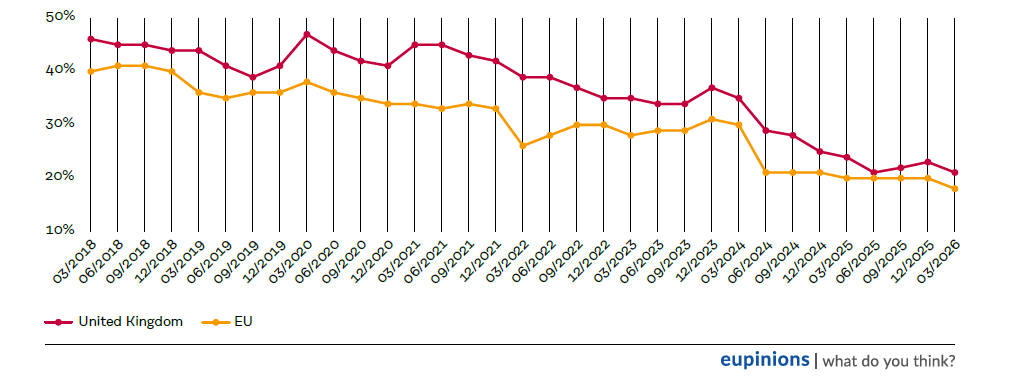
In March 2026, only 21% of Britons and 18% of EU citizens believe that other member states will follow Britain’s example and leave the EU – less than half the share recorded in 2018.
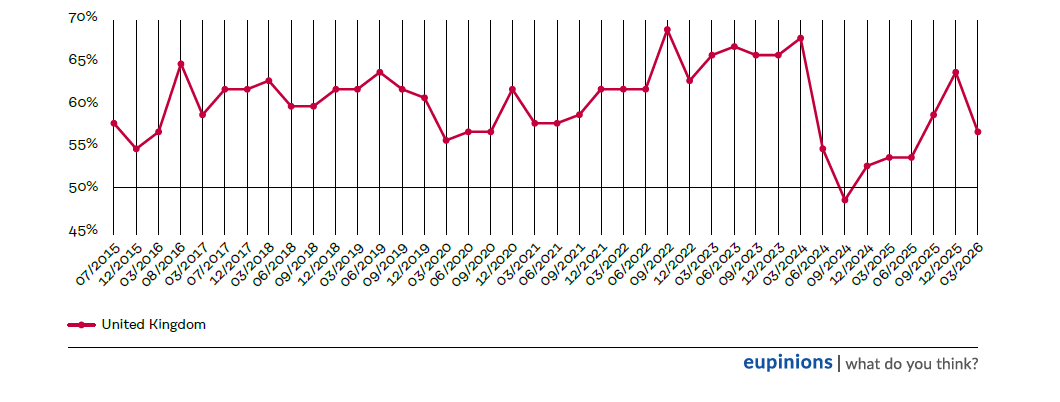
Asked how they would vote in an EU membership referendum, more than 50% of Britons have consistently said over the past ten years that they would vote to stay. In March 2026, support for Remain stands at 57%.
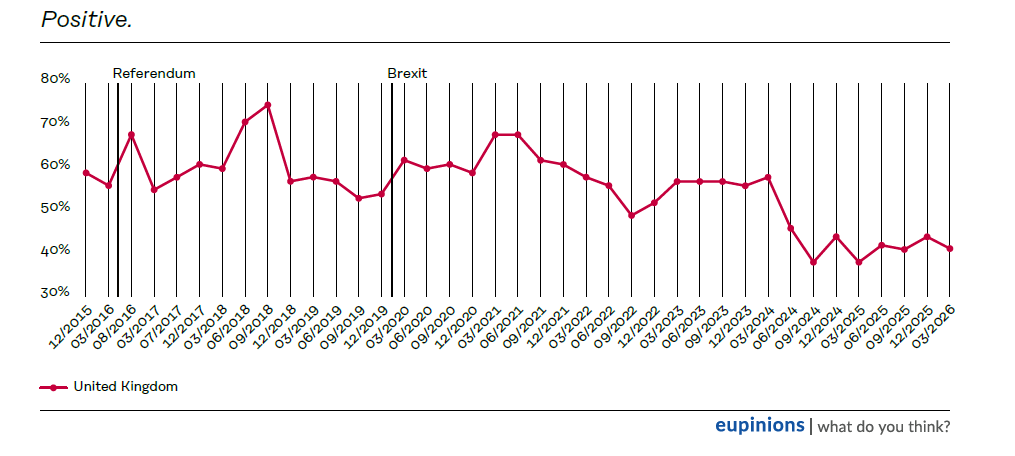
Early Brexit optimism has collapsed. Over the past decade, positive sentiment in the UK across four key indicators – personal outlook, economic situation, the direction of the country and satisfaction with democracy – has declined sharply, with falls ranging from 14 to 27 percentage points.
Brexit has not created a lasting psychological divide between British and European public opinion. Ten years on, Britons and continental Europeans increasingly share common expectations and concerns when thinking about Europe and its future.
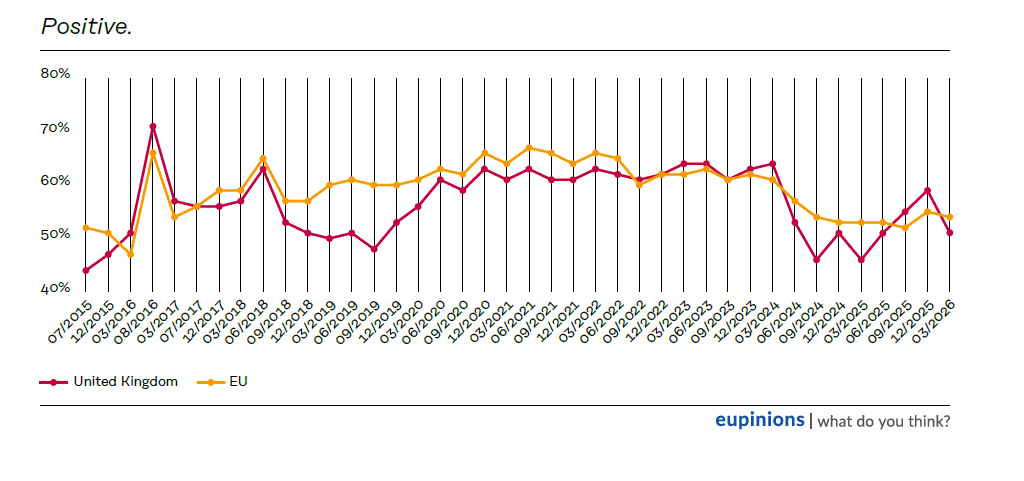
Europeans on both sides of the Channel distinguish between deeper political integration and European cooperation. While support for further integration has weakened, support for EU membership, confidence in the Union’s future and backing for a stronger European role in world affairs remain robust.
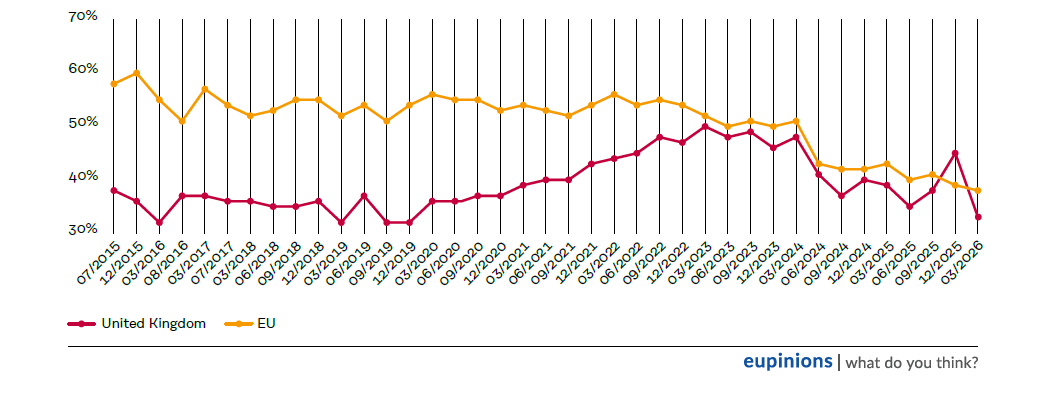
Taken together, the findings point to a gradual softening of the political and psychological barriers that have shaped EU–UK relations since Brexit.
While Britons remain cautious about deeper European integration, support for EU membership remains resilient, attitudes towards Europe increasingly resemble those found across the continent, and clear majorities continue to favour European cooperation in strategic areas.
This does not point to a simple reversal of Brexit, not least because our polling does not examine the internal political and societal divisions that continue to shape opinion on Europe within the United Kingdom. It does, however, suggest growing political space for a more ambitious and pragmatic EU–UK relationship based on shared interests, common challenges and closer cooperation in areas where acting at a European scale increasingly matters – particularly in security and geo- politics.


The relationship of trust and close cooperation between the European Union and the United States of America has been deteriorating, whilst the desire...


How do European citizens view Portugal’s accession to the European Communities? How do they evaluate the 1986 enlargement? And how do they view future...

How do Portuguese citizens view the European institutions? What do Portuguese people know and how do they feel about the EU? How do we assess its...