
Europe’s call for greater independence


In a world increasingly shaped by war, confrontation and great-power rivalry, public opinion across the European Union points in one direction: greater independence. Nearly three in four Europeans now say the EU should ‘go its own way’ after decades of close cooperation with the United States. While the U.S. remains the EU’s top ally, a ‘Trump effect’ has sharply weakened its standing since 2024, and trust in Washington remains low.
China, however, is not the beneficiary of that decline. Europeans are deeply skeptical of China’s global role and want to reduce their dependence – even at an economic cost. Instead, the UK and Canada are gaining ground as key partners, while NATO membership continues to be seen as a key safeguard against threats to peace. The picture that emerges is of a Europe that seeks greater independence while remaining committed to cooperation and collective security.
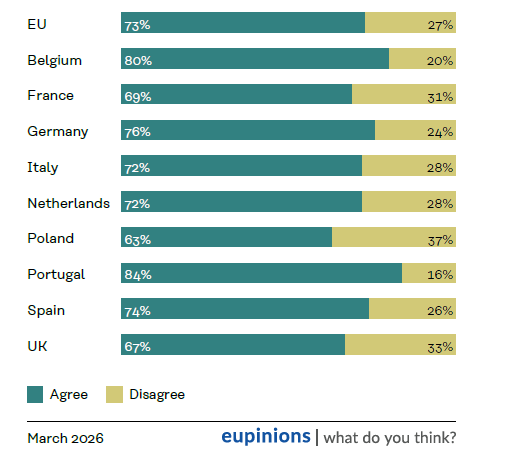
Across the EU, 73% say the Union should ‘go its own way’ after decades of close cooperation with the United States – up from 63% in 2024.
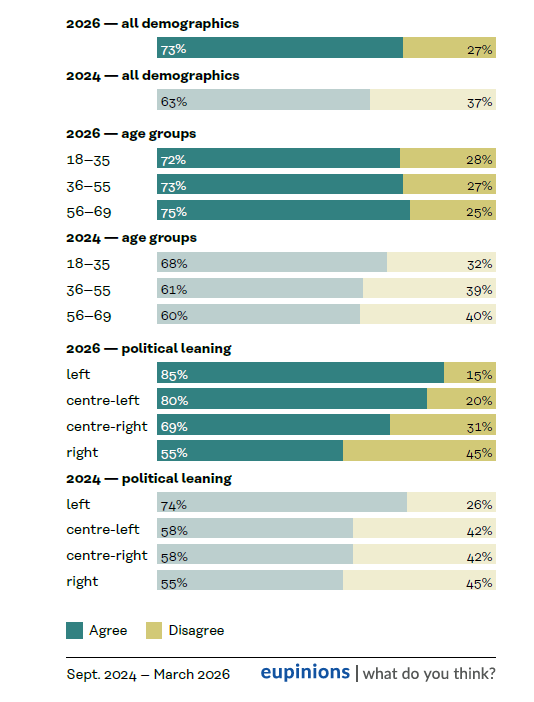
Support for a more independent EU is now high across all demographic groups, with particularly sharp gains among older Europeans: among those aged 56–69, it rose from 60% in 2024 to 75% in 2026.
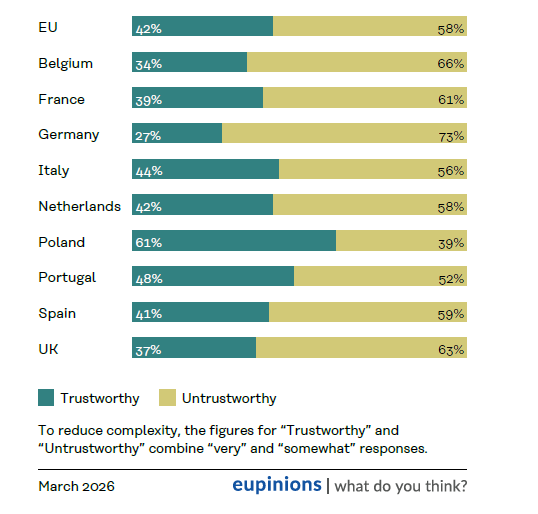
58% of EU citizens mistrust the U.S., up from 54% in 2025.
In 2026, a plurality of 31% still name the United States as the EU’s most important ally, but this is down a striking 20 percentage points from 51% in 2024.
Only 9% of Europeans see China as the EU’s most valuable ally in 2026, while 61% view China’s global influence negatively.
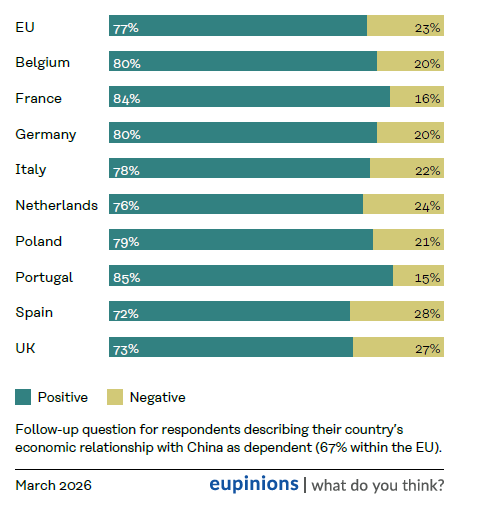
67% say their country is dependent on China, and among them 77% support reducing that dependence even at economic cost.
As the U.S. stock has declined, the UK’s share has risen from 13% in 2024 to 24% in 2026, while Canada’s has increased from 7% to 13%.
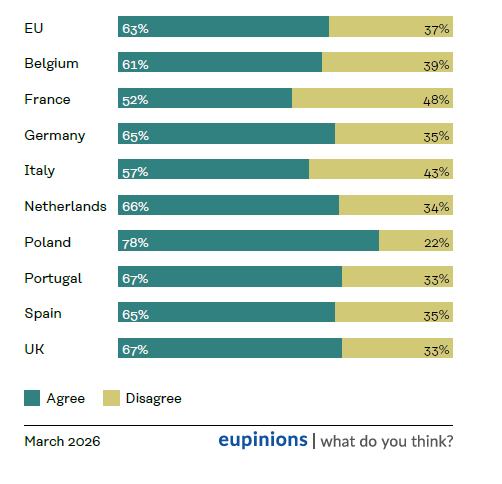
A majority of 63% continue to believe NATO membership provides protection against threats to peace. Furthermore, 57% consider the 5% NATO spending target reasonable.
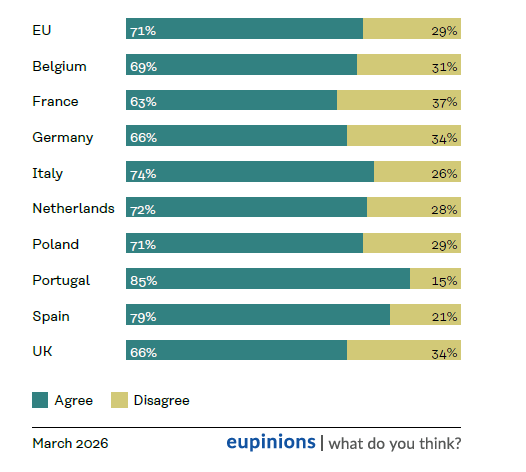
A large majority of 71% say the EU should be more active in world affairs.
Even in a period marked by war and geopolitical tension, 78% say international relations thrive on cooperation rather than competition.


How do European citizens view Portugal’s accession to the European Communities? How do they evaluate the 1986 enlargement? And how do they view future...



How do Portuguese citizens view the European institutions? What do Portuguese people know and how do they feel about the EU? How do we assess its...