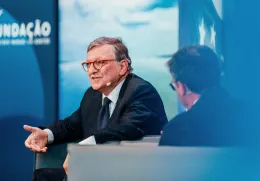
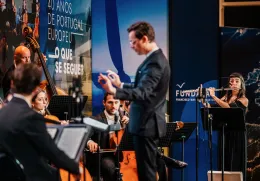
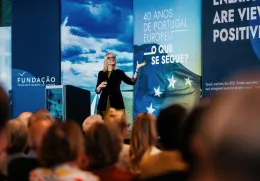
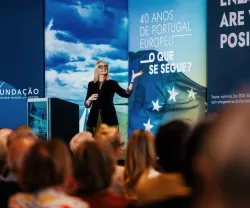
Forty years ago, Portugal joined the European Economic Community. After years of negotiations, the country became a member of what was then a select group of states, with the aim of consolidating democracy and modernising the economy.
Enthusiasm was high and, in the first few years, so was economic growth. In the early 1990s, driven by household consumption, the economy was growing faster than the European average and living standards in Portugal were visibly improving.
European funds, of which Portugal has been one of the largest beneficiaries, were channelled into major public infrastructure such as schools, hospitals and motorways. In a country that had until then relied on agriculture, fisheries and industry, the services sector expanded rapidly.
But at the turn of the millennium, joining the euro, globalisation and the EU’s eastward enlargements exposed the weaknesses of an inward-looking economy that produced generic goods, did not export enough and lacked competitiveness.
Today, the Portuguese economy still relies on low wages: although Portuguese workers put in longer hours than the European average, their productivity remains lower.
Despite the growth of the technology sector and the potential of renewable energy, competitiveness remains a challenge.
Over the past 40 years, Portuguese democracy has become firmly established. Our country’s institutional maturity is now recognised by our partners and by European citizens.
We wanted to see Portugal in the EEC – and we succeeded. Forty years on, what kind of Europe will we help to build?

59



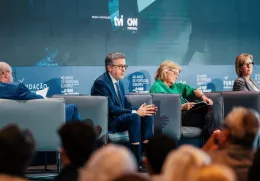
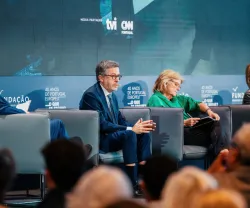
Conferences that bring together leading national and international experts on topics ranging from ethics to issues, from women to young people, from social security to ageing, from economics to science and the universe.