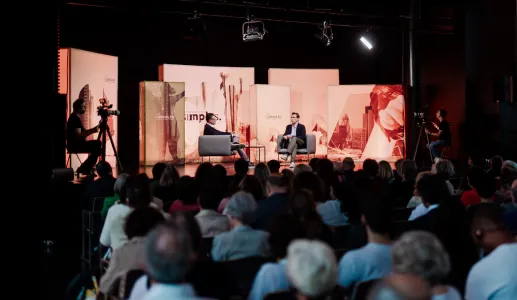
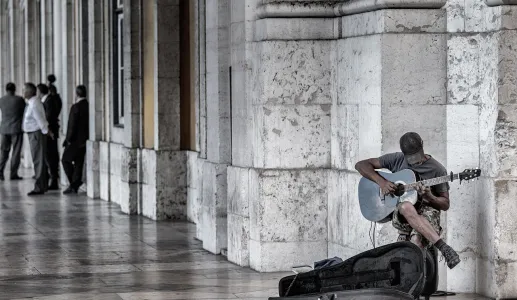
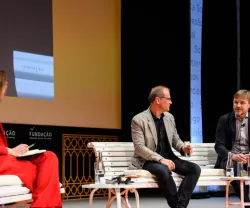
This documentary offers a comprehensive view of one of the country’s great structural challenges: how to prepare Portugal to compete for talent in a...
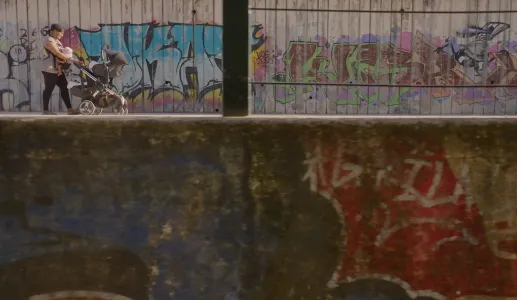
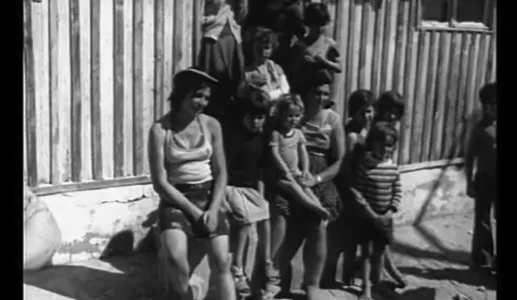
In the 1970s, Portugal was a country where families had a lot of children and there was a strict hierarchical structure – husbands over wives, parents...
A political scientist with a PhD in Comparative Politics from the University of Lisbon, she studies how political institutions and citizens interact in the new digital age. Her research interests include the relationship between parliaments and citizens, political parties, political attitudes and behaviour and the quality of democracy. She is an assistant researcher at the University of Lisbon Institute of Social Sciences and currently a FLAD visiting professor at Georgetown University in Washington, DC. Her work has been published in several academic journals, such as «Policy & Internet», «Party Politics» and the «Journal of Legislative Studies».
Professor at ISPA-IU, in the department of Clinical and Health Psychology. She completed her degree in Clinical Psychology in 1990 and her PhD in Social Psychology in 2004, at ISCTE-IUL and the Faculty of Magisterium of the University of Bologna. She has published scientific articles in national and international journals.
She is also a psychotherapist and family and couple therapist.
She has a PhD in Philosophy, with aggregation in Philosophy, specialising in Ethics, and in Nursing. She was vice-president of the National Council of Ethics for Life Sciences in the fifth mandate (2015-2020). She is a coordinating teacher and runs the nursing department at the Setúbal Polytechnic School of Health. She is on the Ethics Committee for Health at the Setúbal Hospital Centre and on the Ethics Council at the University of Minho.
He is Professor of European Youth Policy at the University of South Wales in the UK. He has worked at the Universities of Oxford, Cardiff and Copenhagen and has been Visiting Researcher at universities and institutes in Hong Kong, Malta, Croatia, China, France, Australia and Iran. He has published widely on youth and youth policy and worked extensively with young people. Throughout his career, he has been an advisor on youth policy issues to the Welsh and UK governments, the European Commission, the Council of Europe and the United Nations. In addition to his academic work, he ran a youth centre for 25 years. He is a trustee of Grassroots – the Cardiff City Centre Youth Project, the European Forum Alpbach Foundation and the Duke of Edinburgh's International Youth Award. Since 2002, he has been organisational secretary of RC34 – Sociology of Youth of the International Sociological Association.
He was awarded Commander of the Order of the British Empire (CBE) in 2002 and, in 2016, Commander of the Royal Victorian Order (CVO).
Born in Rio de Moinhos – Aljustrel in 1952, he went to secondary school in Aljustrel, Faro and Lisbon, where he lived (in Moscavide), worked and studied from the age of 16. He went to ISCTE-IUL from 1981 to 1985, when he completed his Bachelor’s degree in Sociology and joined the University of Coimbra School of Economics as an assistant, before also joining the team at the Centre for Social Studies in the same university. Since then, he has taught, done research and published on subjects such as classes and social inequalities, the sociology of business and labour relations, trade unionism, youth and social movements. He got his PhD at the University of Coimbra in 1999, with a thesis on the footwear industry, based on participant observation in a factory in the sector (published under the title Between the Factory and the Community, published by Afrontamento, 2000).
He has a PhD in Economics from Nova School of Business and Economics (Nova SBE), an institution where he is a member of the Centre for Economics of Education and where he got his Bachelor's degree and MPhil in Economics. His research focuses on the subjects of Economics of Education and Human Capital, such as: measures of added value for teachers, differentials between internal and external scores, reasons behind the progression in PISA tests and factors of success in higher education.
His work uses comprehensive databases of both the labour market and the Portuguese education system. He was also involved in the impact assessment for different educational projects developed in Portugal. He was a visiting student in the economics department at the University College of London (UCL). He is a visiting assistant at Nova SBE for several Bachelor’s degree and Master's degree courses.
A sociologist, she has a PhD in Social Sciences from the University of Lisbon, with a thesis on youth, family and autonomy. Since 2001, she has collaborated with the Permanent Youth Observatory of the Institute of Social Sciences of ULisboa, where she is currently an advisor to the board.
Since 2010, she has been Adjunct Professor at the School of Education of the Polytechnic Institute of Santarém, where she co-coordinates the internships for the Degree in Social Education.
She has participated in numerous national and international projects and is the author and co-author of several publications in youth and education studies.
More recently, she has dedicated herself to studying young people in NEET conditions (i.,e., who are not in employment, education or training) as a political and media construction that alienates the young people at whom policies, services and support are directed.
Economist and researcher in Political Science at ISCTE-IUL. Director of the postgraduate Pprogram in Critical Thinking and Decision-Making at ISCTE Executive Education, and guest lecturer at Católica-Lisbon.
Consultant, trainer, and speaker on critical thinking and decision-making, with organizations such as Sonae, Nestlé, Fidelidade, Bosch, Isdin, E.Leclerc, Auchan, and C2, among others.
Host of the award-winning podcast «45 Graus» (currently, in partnership with the newspaper Expresso).
Commentator on the program «Contraponto», broadcast on the tv channel RTP News.
He has a PhD in Anthropology from ISCTE-IUL and is an emeritus researcher at the University of Lisbon Institute of Social Sciences. Among the topics to which he has devoted his attention are Portuguese rural society, family and kinship, nationalism, racism, social memory, the history of anthropology, food and cooking and epidemics (the «Spanish flu»). Among his publications, as author and editor, are the books: «Trajetos: o Passado e o Presente na Vida de uma Freguesia da Beira» (1999); with Jorge Vala, «Identidade Nacional, Inclusão e Exclusão Social» (2010); «Portugal, the Portuguese: A National Identity" (2012); with Nuno Domingos and Harry G. West, «Food between the Country and the City: Ethnographies of a Changing Global Foodscape» (2014); with Manuel Carlos Silva, «Ethnicity, Nationalism and Racism: Migration, Ethnic Minorities and School Contexts» (2015); «The Ethnography of Aquilino Ribeiro» (2021). He was president of the Portuguese Anthropology Association (APA) and director of the journal «Análise Social».
Professor of Sociology and Sociological Practice at the University of Leicester, UK, where he worked for over 20 years at the Centre for Labor Market Studies (CLMS), including serving as Director for five years, before returning to the Sociology department (now the School of Media, Communication and Sociology). His approaches sociology as a “craft”, working from the premise that social life is best understood by examining long-term social and historical processes through the intersection of history and individual biographies. He is a member of the sociology panel of the UK Research Excellence Framework and chair of the Data, Infrastructure, Skills and Methods Advisory Group on the expert panel of the UK Economic and Social Research Council.