
A
A

Economy

O passado pela frente
Viaje pelos principais acontecimentos deste tema
Fátima Barros.png
Author
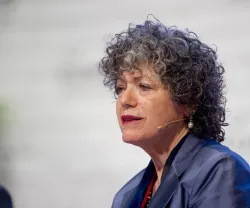
Fátima Barros
Fátima Barros owns a PhD and a Master's Degree in Economics from the Catholic University of Louvain, Belgium (European Doctoral Programme in Quantitative Economics). Since 1992, she has been a Professor at the CATOLICA LISBON School of Business & Economics, where she also obtained her bachelor's degree in Economics, in 1986. She has several published works in the fields of competition, regulation and strategy in top international scientific journals.


She was the Director of CATOLICA LISBON between 2004 and 2012, and Deputy Director between 2001 and 2004. While holding the position of Director of the Faculty, she was invited to join the Directors' Boards of many institutions linked with university education in Europe and the USA; and was member of several Advisory Boards of Business Schools in France, England and Switzerland.
She is currently a non-executive director at BRISA Concessão Rodoviária and Banco BPI, where she is also Chair of the Audit Committee.
Chairwoman of the Board of Directors of the Francisco Manuel dos Santos Foundation since November 2025. Trustee of the Fundação Francisco Manuel dos Santos from 2024 until november 2025, she was a non-executive director between 2017 and 2023.

Last updated: november 2025
ThomasPhilippon.png
Author
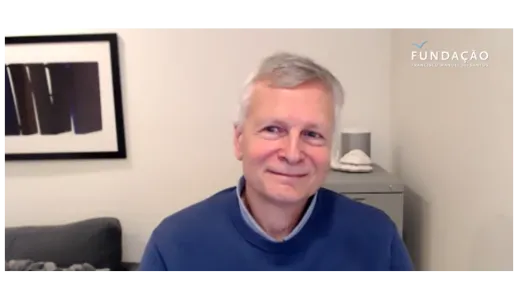
Thomas Philippon
Professor of Finance and holder of the Max L. Heine Chair at New York University's Stern School of Business. He was named one of the «25 most promising economists under 45» by the IMF in 2014. He won the Bernácer Prize in 2013 for the best European economist under 40, the Michael Brennan & BlackRock Prize in 2010, the Prize for the Best Young French Economist in 2009 and the Brattle Prize for the best article on Corporate Finance in 2008. He has studied various topics in the fields of macroeconomics and finance: systemic risk and the financial crisis, the dynamics of corporate investment and household debt, innovation and financial regulation and the Eurozone crisis. His latest book «The Great Reversal» (Harvard Press, 2019) focuses on the growing market power of large companies. He serves as Academic Consultant for the Financial Stability Board and the Hong Kong Institute for Monetary and Financial Research. He was a Consultant to the Federal Reserve Bank of New York, a member of the Prudential Supervision and Resolution Authority of the Banque de France between 2014 and 2019 and Senior Economic Advisor to the French Minister of Finance from 2012-2013.

Pedro Pita Barros.png
Author
Pedro Pita Barros
Pedro Pita Barros is a full professor at the Nova School of Business and Economics, Nova University Lisbon, where he is the BPI | Fundação la Caixa Professor of Health Economics, and a member of the Economic and Social Council (voted Personality of Recognised Merit).
Pedro held the position of Vice-Rector of Nova University Lisbon (2013-2017) and he is a member of the EC Expert Panel on Effective Ways of Investing in Health (EXPH) (the European Commission, by selection). He was the President of the European Health Economics Association (2013-2016) and a member of the Board of Directors of the Energy Services Regulator (2005-2006). He was also the President of the Portuguese Health Economics Association (1998-2000; 2009-2010), a member of the EC Mission Board for Cancer (the European Commission, by selection) (2019-2020), a member of the National Council of Ethics for Life Sciences (2015-2021) and a member of the National Health Council (representing the Council of Rectors of Portuguese Universities) (2016-2021).
Pedro has been honoured as a Grand Officer of the Order of Prince Henry (Ordem do Infante D. Henrique) and with a gold medal for Distinguished Services, awarded by the Ministry of Health.
His research work is in the areas of health economics, economic regulation and competition policy. He acts as a consultant for public and private bodies in the same areas.

Last updated: August 2025
PedroBrinca.png
Author
Pedro Brinca
He is an associate professor at the Nova School of Business and Economics (Nova SBE) in Lisbon. He got his PhD in Economics from Stockholm University in Sweden, where he also taught between 2007 and 2014.
He taught at the University of Zurich in Switzerland. He worked as a researcher at the European Central Bank and was a fellow at the Robert Schuman Centre for Advanced Studies at the European University Institute.
He carried out research at the Centre for Economics and Finance at the University of Porto until 2019. His research focuses on the interaction between micro-heterogeneity and macroeconomic dynamics, particularly on the topics of fiscal policy and optimal taxation.
He has published several papers in international scientific journals, such as the Journal of Monetary Economics or the Journal of Economic Dynamics and Control, and contributed to the second edition of the Handbook of Macroeconomics.

Last updated: April 2024
PauloMadruga.png
Author
Paulo Madruga
Associate Partner, EY-Parthenon Portugal, Ernst & Young, S.A. Leads EY-Parthenon's Government and Public Sector team. He is a visiting professor at the University of Lisbon, where he teaches Macroeconomics and Economic Policy. Throughout his 30 years of professional experience, he has coordinated studies and projects on regional and sector analysis, impact measurement and evaluation, foresight and regional planning, monitoring and follow-up of regional and sector plans and strategies, as well as specific studies on the Portuguese and European economies.
Nuno Garoupa_vf_0.png
Author
Nuno Garoupa
President of the European Association of Law & Economics. He is a Professor of Law at George Mason University in the United States and holds the Chair in Research Innovation at Católica Global Law School.
He has a Bachelor’s degree in Economics from Nova University Lisbon, holds a Master's degree in Economics and Law (LL.M.) from the University of London and a PhD in Economics from the University of York, UK.
He joined the Executive Board of the American Society for Comparative Law (2021-2023), after having chaired the Spanish Association of Law and Economics between 2017 and 2021. He has taught at Texas A&M University (2015-2018), the University of Illinois (2007-2015), Nova University Lisbon (2001-2007) and Pompeu Fabra University in Barcelona (1998-2001).
He was awarded the Julián Marías prize by the government of the Autonomous Community of Madrid in 2010. He has written more than 150 scientific articles published in international journals.
He was Chairman of the Board of Directors of Fundação Francisco Manuel dos Santos between 2014 and 2016 and has been a member of its Board of Trustees since 2018.

Last updated: January 2024
MiguelOliveiraDaSilva.png
Author
Miguel Oliveira da Silva
Full professor of Medical Ethics at the University of Lisbon School of Medicine and obstetrician and gynaecologist at Santa Maria Hospital. He was the first elected president of the National Council for Ethics in Life Sciences (2009-2015), he is coordinator of three projects on sexual and reproductive health in the European Union (2003-2010) and was elected vice-president of the Bioethics department of the Council of Europe (2018-2019). He has published very widely on bioethics issues.
MarthaBailey.png
Author
Martha Bailey
She is Professor of Economics and Researcher at the Center for Population Studies at the University of Michigan. Her research focuses on labour economics, demography and health in the US, from a long-term economic-historical perspective. Her work analyses the implications of the spread of modern contraception on motherhood, career decisions and pay. She has a special interest in analysing «Great Society» programmes in the short and long term and the creation of a Micro Electronic Database (LIFE-M), which allows economic growth and geographic mobility to be studied, as well as family formation throughout the twentieth century.