This documentary offers a comprehensive view of one of the country’s great structural challenges: how to prepare Portugal to compete for talent in a...
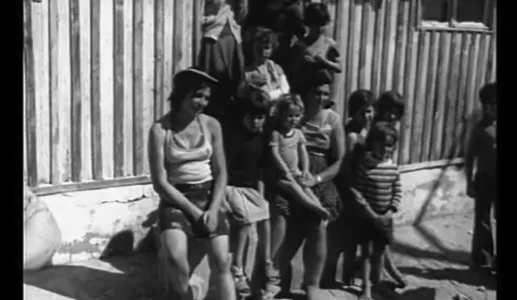
In the 1970s, Portugal was a country where families had a lot of children and there was a strict hierarchical structure – husbands over wives, parents...
Assistant Professor at ISCTE – University Institute of Lisbon and researcher at CIES (Centro de Investigação e Estudos de Sociologia). She completed her Master’s degree and PhD in Demography at Nova University Lisbon FCSH.
He got his PhD in Economics from the University of Amsterdam/Tinbergen Institute in 2007. He is currently Associate Professor at the University of Minho (U Minho) and Director of the PhD programme in Economics at the same institution. He is also a researcher at NIPE (UMinho), CIPES (UAveiro and UPorto) and the Institute of Labour Economics (IZA), Germany, and assists the Bank of Portugal on a permanent basis. His research focuses mainly on Labour and Education Economics and Applied Econometrics. He has written several academic papers, books and book chapters, and has been published in prestigious journals such as Econometrica, the Scandinavian Journal of Economics, Regional Studies and Studies in Higher Education. His work has been cited, among others, in prestigious specialist journals such as Brookings Papers on Economic Activity, the Review of Economics and Statistics, the Journal of Business and Economic Statistics, the Industrial and Labour Relations Review and Labour Economics. He maintains research collaborations in several countries, leading and integrating research teams that develop funded projects. He has authored policy-oriented reports on minimum wages, education and employment applicable to the Portuguese labour market. He also has extensive experience in consultancy for both private and public institutions.
Assistant Professor with aggregation at the University of Lisbon Higher Institute of Economics and Management (ISEG/ULisboa) and member of SOCIUS/CSG at the same institution. Degree and PhD in Economics from ISEG/UTL.
PhD in Mathematics from the University of Évora in 2004.
His area of specialisation is Statistical Quality Control, but he has also published several papers and provided guidance in Statistical Modelling. He is currently a lecturer in the Mathematics department and an integrated member of the Research Centre for Mathematics and Applications.
She was born in Barcelona in 1972. She holds a Master’s degree in Business Sciences and a Bachelor’s degree in Market Research and Techniques from the University of Barcelona. She has taught market research on courses and Master's degree programmes at the University of Barcelona and the Open University of Catalonia (UOC). She has been with PRM for 25 years and is currently senior project manager.
For more than 30 years, he has been giving consultations to children, adolescents and parents, closely following the changes in Portuguese families. He directed the Paediatrics Service at the Lisbon North Hospital Centre between 1972 and 1980 and helped to set up the first Child Development Unit in the country, at Santa Maria Hospital in Lisbon.
He was a professor of Paediatrics and Public Health at the Nova School of Medical Sciences in Lisbon, and a guest lecturer in the United Kingdom and Spain. He chaired the Social and Community Paediatrics section of the Portuguese Society of Paediatrics and the European Society for Social Paediatrics.
He founded and chaired the Association for the Promotion of Child Safety (APSI). He was a member of the National Committees on Women's and Children's Health, Children's Rights and Good Practices in Homes and ran the National Health Observatory.
In addition to being a member of the Academy of Arts and Literature, he has written dozens of books, such as «Children and Families in a Changing Portugal» and «Hurried Parents, Stressed Children», and bestsellers like «The Great Book on Babies».
Assistant Professor at ISEG, University of Lisbon, and researcher at UECE, ISEG, in the areas of Pension Economics and Financial Economics. She has written books, as well as several articles for international journals.
She is a full professor in the Department of Social Psychology and the Psychology of Organisations at ISCTE – University Institute of Lisbon, where she has taught since 2004. She does her research work at the Research and Social Intervention Centre at the same university.
She has coordinated several research projects throughout her career, having specialised in the application of Social Psychology to health and environmental issues. One of the topics that she looked into more closely is the question of risk perception, from the social factors that affect it to its consequences for public participation in decision-making processes.
Between 2006 and 2010, she chaired the Portuguese Association of Psychology. She was a member of the Scientific Council of Social Sciences and Humanities at the Foundation for Science and Technology.
She has written several books, such as «Social Psychology of Health, Volumes 1 and 2» (Edições Sílabo) and the essay «Ourselves and Others: The Power of Social Ties», published by Fundação Francisco Manuel dos Santos.
Sociologist. Research coordinator at the University of Lisbon Institute of Social Sciences. Bachelor’s degree in Philosophy from the University of Lisbon, 1969. PhD in Sociology from the University of Oxford, 1978.
He holds a PhD, a Master's Degree and Bachelor's Degree in Sociology from the University of Coimbra. Between 1998 and 2015, he was Lecturer at the Faculty of Fine Arts of the University of Porto.
Since 2015, he has been Lecturer at the Faculty of Economics of the University of Coimbra. He is also Permanent Researcher at the Centre for Social Studies of the University of Coimbra, where he has dedicated himself to researching international migration.
He also collaborates with various national and international agencies and institutions, such as the International Organisation for Migration, the International Centre for Migration Policy Development (ICMPD), the European Commission, the Council of Europe and the European Migration Network.
He has published over 100 articles and books on emigration and immigration in Portugal and Europe. In his most recent work, «Common Home» (2019), Pedro Góis notes that «migration flows to Portugal produce positive effects, mitigating, in the short term, the consequences of population ageing and decline» yet requiring long-term demographic planning, which has yet to be done.